
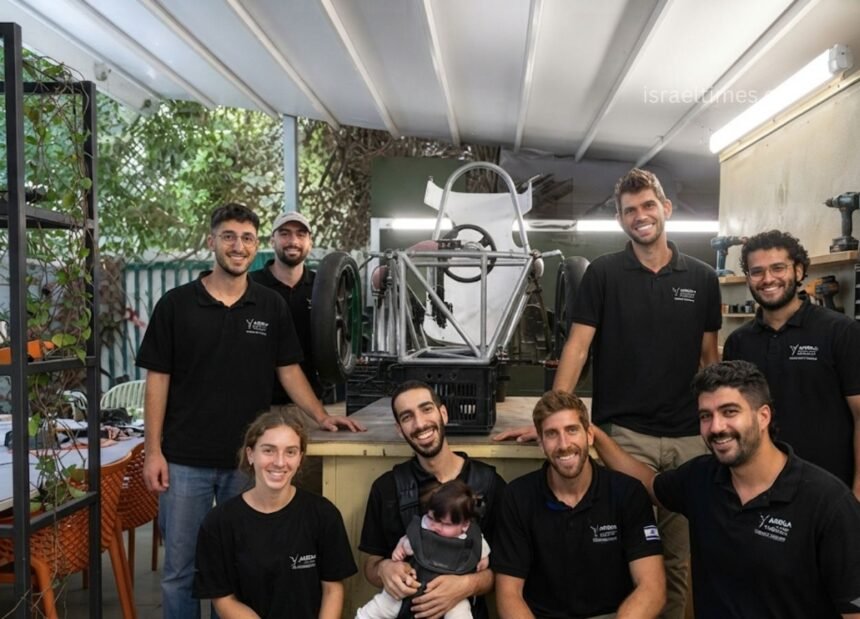
An engineering student team from Tel Aviv’s Afeka Academic College of Engineering has made history this week, becoming the first Israeli delegation to take part in the renowned iLumen European Solar Challenge in Belgium. israeli Team European Solar Challenge
In a car constructed entirely from scratch using solar energy, the Afeka Racing team managed to complete 197 laps (a distance of 800 kilometers within 24 hours) and finished at a remarkable 14th place out of 30 teams around the world.
The successful debut represents a significant step forward in promoting the international academic interest in sustainable transport technologies. Not only does the project demonstrate a respectable result against experienced solar racing competitors, but it also demonstrates the importance of hands-on learning.

By managing real-world operational variables under intense pressure, the initiative bridges the traditional gap between classroom theory and the fast-evolving commercial clean-tech industry.
The custom vehicle features an aerodynamic carbon-fiber body structure designed to maximize energy efficiency while reaching top speeds of up to 110 kilometers per hour. Preparation for the rigorous competition extended far beyond physical construction; students conducted extensive trial runs on local Israeli racetracks and utilized advanced computer simulation laboratories to map the Belgian circuit.
This meticulous virtual training allowed drivers to analyze turn speeds, perfect braking maneuvers, and optimize power consumption prior to arriving at the venue.
Navigating the 24-hour race required flawless operational strategy, tactical driving, and strict power conservation. Teams adhered to precise competition rules governing battery usage, charging intervals, and scheduled driver rotations.
Each driver undertook demanding two-hour stints behind the wheel, balancing maximum efficiency with track conditions as daylight faded into night. Completing the full duration on their first attempt served as a major accomplishment, given that several experienced teams routinely fail to cross the finish line.
The cross-disciplinary effort brought together third-year undergraduates alongside alumni mentors across mechanical, software, electrical, and industrial engineering fields. Designed to foster hands-on technical problem-solving, the curriculum encourages students to negotiate vendor contracts, manufacture custom components, and address complex mechanical breakdowns under strict budgetary limits.
Project leadership emphasizes that the program aims to cultivate top-tier engineering talent capable of making an immediate impact on global technology sectors.
Looking forward, Afeka Racing plans to build upon its initial success by refining the vehicle’s architecture and developing next-generation iterations.
The team has already outlined plans to target future international endurance competitions, including prospective entries in Australia’s solar challenges.
Meanwhile, program directors report that the project is already yielding tangible professional results, directly funneling skilled student developers into high-tech engineering roles across the domestic startup ecosystem. Israel Times