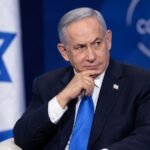


A lack of unity among rival factions within the Israeli right wing in the run-up to the coming election may result in a divided right-wing camp and a squandering of valuable votes from the right, the veteran political correspondent of Israeli public broadcasting Michael Shemesh said on Wednesday. Netanyahu Faces
Commenting on the political situation following the expiry of the deadline for the submission of candidates’ lists to participate in the next Knesset elections, Shemesh described it as “a big strategic mistake” by Netanyahu since he seems unusually ill-prepared for the upcoming campaign.

The core vulnerability stems from a proliferation of small right-wing parties competing independently rather than forming unified lists. According to Shemesh, several conservative factions risk failing to cross the 3.25 per cent electoral threshold required to secure parliamentary representation, effectively neutralising thousands of votes that would otherwise support a right-leaning administration.
Among the most vulnerable political entities highlighted is the new faction led by former IDF Brigadier General Ofer Winter. While recent opinion polls project Winter’s party hovering around four seats, it remains precariously close to the electoral threshold. If Winter or other minor right-wing slates fall short on election day, their votes will be completely discarded, fundamentally altering the parliamentary arithmetic required to form a viable government.
Drawing a sharp contrast with previous campaign cycles, Shemesh noted that Netanyahu previously acted as a master orchestrator, engineering strategic mergers across the right-wing ecosystem prior to the last elections. That active consolidation enabled his coalition to secure a decisive 64-seat parliamentary majority. In this election cycle, however, Netanyahu’s passive approach toward minor right-wing factions has left the bloc exposed to dangerous vote dilution.
Political commentators emphasise that the math remains unforgiving for the ruling party. Without the threshold protections provided by unified slates, the right-wing ecosystem risks burning critical votes that could determine the balance of power in Israel’s divided political landscape. Analysts stress that unless Netanyahu finds an emergency mechanism to mitigate this threshold threat, the right-wing bloc could easily fall short of the crucial 61-seat majority needed to retain control of the Knesset and form a stable governing coalition.
As the election approaches, opposition parties stand to benefit significantly from this conservative fragmentation. With no remaining technical opportunities to merge candidate slates before voters head to the polls, Netanyahu’s camp faces an uphill battle to convince voters away from small threshold-bound parties and back toward the core coalition slates, making this one of the most perilous political calculations of his tenure. Israel Times