

A special app designed for Apple’s Mac OS platform has been created by Meta for its virtual assistant named Muse, showing the company’s shift in strategy from stand-alone chatbot assistants towards integrated desktop assistants that would help users with their productivity tasks.
The desktop version of Muse will allow the artificial intelligence to be more useful in people’s everyday work because it will have direct access to operating system functions and local files on the user’s computer. The news about the launch was made public by Meta CEO Mark Zuckerberg and Scale AI founder Alexandr Wang.
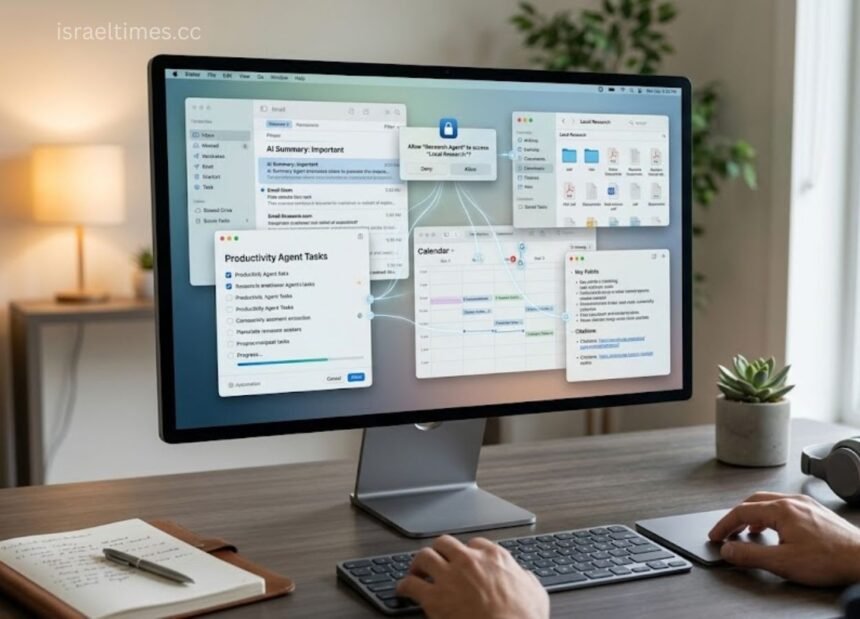
Unlike traditional AI software operating inside isolated web browsers, the macOS application is built to interface natively with the operating system. Users can permit Muse to connect with local files, Apple Messages, Calendar, Notes, and Mail. This architecture enables the assistant to carry out complex, multi-step actions across programs—such as reviewing internal documents, managing daily scheduling requests, drafting response emails, and organizing multi-app projects directly within the desktop workspace.

To address growing security concerns surrounding automated desktop software, Meta built the application around strict, opt-in privacy frameworks. System permissions remain restricted by default, requiring explicit user authorization before indexing local drive directories. In addition, the software mandates manual confirmation prompts prior to executing sensitive local file modifications, scheduling calendar entries, or dispatching outbound electronic messages.
The Mac release highlights intensifying competition across the technology industry to deploy “agentic AI”—systems capable of navigating software interfaces and executing sequential tasks autonomously. By transitioning Muse from a mobile tool into a desktop system agent, Meta is seeking to position its platform as an essential operational layer for personal and enterprise productivity.
The launch of Meta’s Muse Mac application marks a decisive step toward agentic AI, turning desktop operating systems into active, automated workspaces. By combining deep app integration with strict user permission controls, Meta establishes a new framework for everyday digital productivity.