

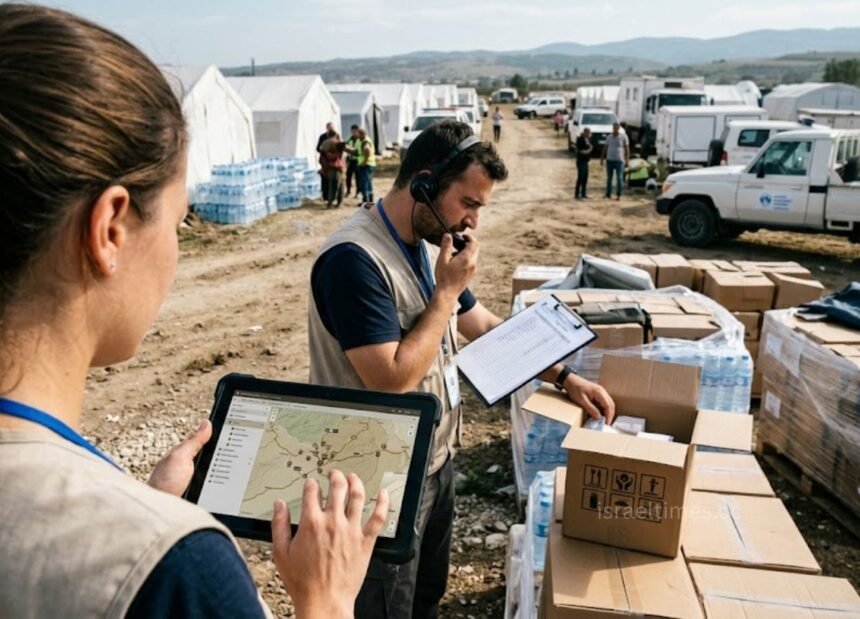
The philanthropic arm of the workplace productivity firm, Monday.com, is using advanced technology and low-code project management tools to bring order into chaos in global disaster response.
Unlike traditional donation programs or fundraising, the Tel Aviv company employs its Emergency Response Team (ERT), which consists of experts from its social impact division, to go on-site to help with crises. Once the specialists arrive at the scene, they collaborate with the local emergency responders, non-state organizations, and international agencies to ensure that communication is no longer fragmented and introduce efficient digital solutions.
The process aims to fill perennial gaps in the non-profit industry by bringing advanced cloud-based project management systems and intelligent algorithms into play.

The lack of flexible digital tools during sudden emergency operations. When natural disasters strike, ground crews frequently rely on physical whiteboards, paper forms, and disconnected messaging apps to track missing persons, manage incoming supply chains, and assign search-and-rescue grids.
The deployment of corporate workflow technology enables aid workers to build central command dashboards within hours of a catastrophe, drastically reducing administrative delays and eliminating duplicate efforts across relief agencies.
The tech-driven strategy has proven particularly effective in navigating complex international deployments. Private sector technology delegations can sidestep the diplomatic friction, bureaucratic delays, and political sensitivities that frequently hamper state-led aid missions. According to Myriam Kuperman, head of the Emergency Response Team, the division’s core focus centers on identifying operational bottlenecks directly with local managers who understand field dynamics best, allowing aid groups to customize software solutions to their exact logistical challenges.
The initiative highlights a growing movement among publicly traded technology firms to apply commercial enterprise software directly to social impact challenges. By embedding private sector productivity tools into humanitarian workflows, emergency management networks can optimize resource allocation, maintain real-time operational visibility, and accelerate critical relief efforts in regions where municipal services and communication networks have collapsed.